


Twinning

SHARING EXPERTISE & INFORMATION
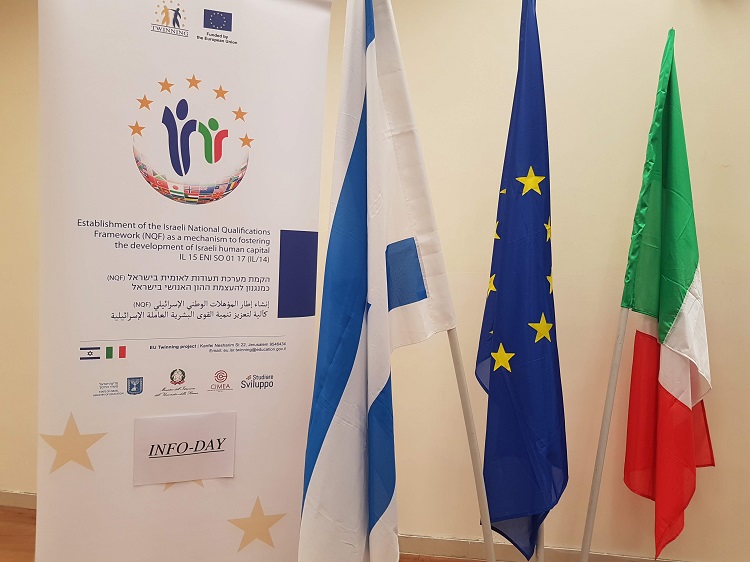
Twinning is a European Union instrument for institutional cooperation between public administrations of EU Member States and similar institutions in partner countries. Twinning projects bring together public sector expertise from EU Member States and partner countries, with the aim of achieving concrete mandatory operational results through peer-to-peer activities. Thus Twinning is based on partnership and genuine cooperation between equal partners.
The Israeli NQF
Main features of the NQF
Levels based on expected learning outcomes – Most commonly, NQF describe tertiary qualifications based on levels of knowledge, skills, competencies, values and attitudes, etc. NQFs describe types of qualifications and how levels connect with one another (e.g. how academic and vocational qualifications compare).
Part of a system of quality assurance policies – An effective system of quality assurance is fundamental to support a well-functioning NQF.
Multiple sectors and learner pathways – While diverse, NQFs tend to be inclusive of all tertiary education and training sectors and learning pathways (e.g. TVET, higher education, and public and private institutions).
Embrace different ways of learning – NQF often include different modes of learning, including formal, nom-formal and informal learning so that outcomes are comparable, recognizable and transferable, and thus contribute to lifelong learning.
The Twinning Project
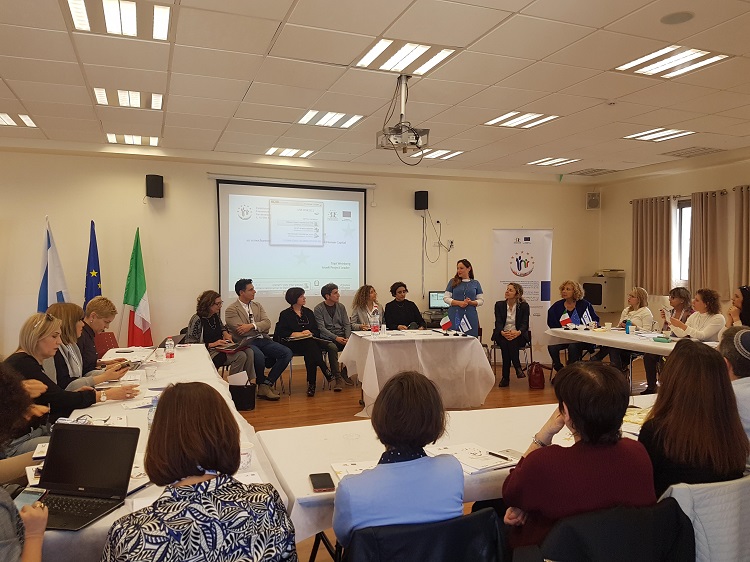
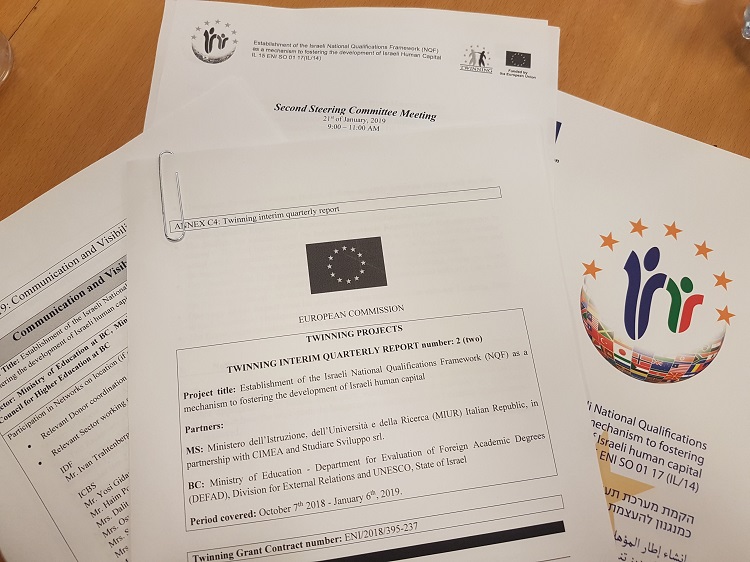
The Twinning Project "Establishment of the Israeli NQF as a mechanism to fostering the development of Israeli Human Capital" aims to support the establishment of a functioning National Qualification Framework by contributing to the works of the inter-ministerial WG and providing concrete examples on how to bring qualifications from different educational sectors such as VET and Higher Education into a single framework. During the Twinning project, the Italian experts support the Israeli partners in designing and providing training and awareness raising events in order to enhance stakeholders' engagement and participation.
The Twinning is focused on three main components:
- The institutional component focusing on the establishment of the Israel NQF Apex Body and its governance options (i.e. the role of each actor such as institutions, agencies, providers, social partners in the framework).
- The structural component for defining the structure of the NQF and a roadmap including proposed level descriptors, procedures for levelling of qualifications, standards and criteria for drafting the learning outcomes.
- The legal component aiming to provide to the Israeli authorities some recommendations to establish the legal framework for the Israeli NQF and for its implementations.
- The works start focusing on 3 / 4 pilot sectors and institutions showing readiness and willingness to start practicing with the functioning of the NQF.
IL Project Leader: Ms. Tsipi Weinberg, DEFAD, tsipiwe@education.gov.il
The Italian implementing partner is the Ministry of Education, Universities and Research (MIUR), supported by CIMEA and Studiare Sviluppo.
IT Project Leader: Mr. Federico Cinquepalmi, federico.cinquepalmi@miur.it
Contacts
-
Mr. Federico Cinquepalmi
Ministry of Education, University and Research, Italy
-
Ms. Claudia Fellus
Project Leader Israel
דוא"ל: tw.rta.it@gmail.com -
Mrs. Tsipi Weinberg
Residant Twening Advisor
דוא"ל: tsipiwe@education.gov.il -
Mrs. Natalei Ben Shalom
Resident Twinning Adviser Counterpart
דוא"ל: natib@education.gov.il